Terminal A (Levante)
Main cruise terminal on the Levante quay, operated by Malaga Cruise Port, with two passenger boarding bridges; used for large ships, both turnaround and transit calls. Assignments vary by sailing.
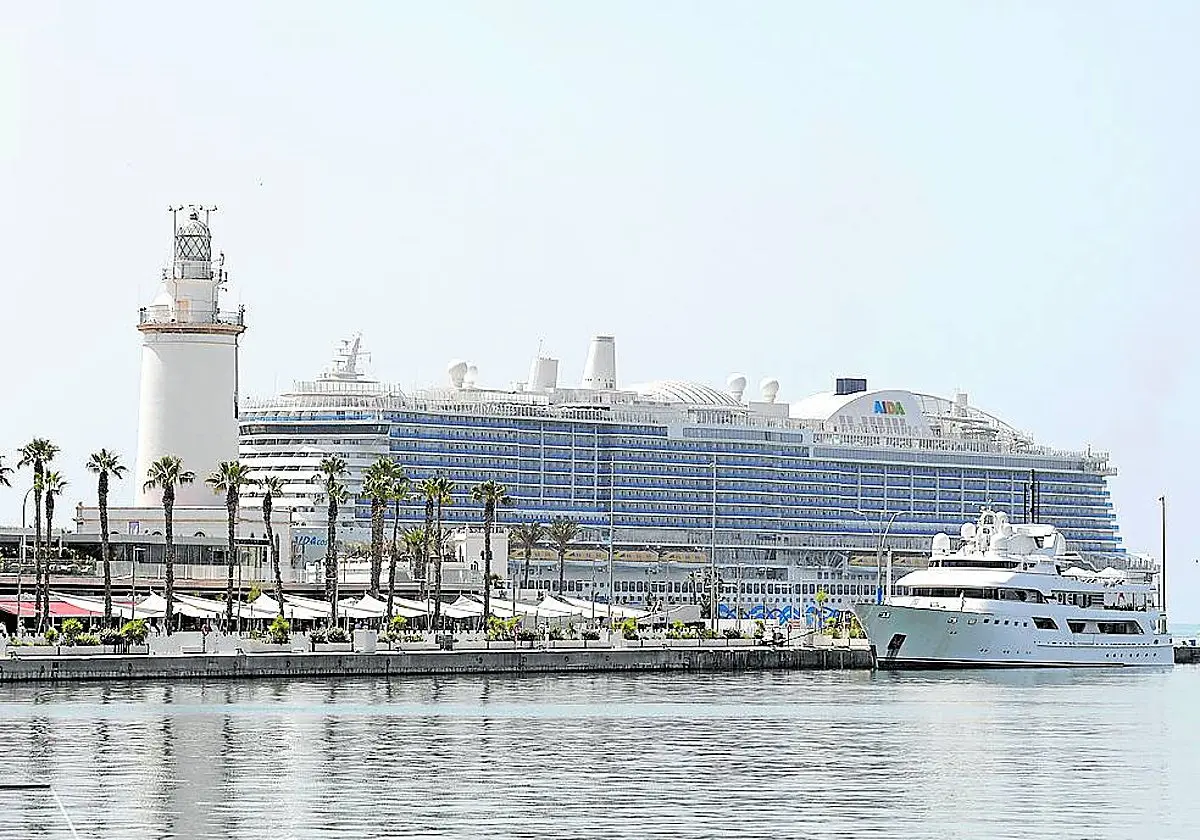
Malaga is the capital of the Costa del Sol and one of the oldest cities in Europe, founded by the Phoenicians and later shaped by Roman and Moorish rule. More about Málaga →
October 2026 · from today · all times local (Central European Time)
Showing 9 of 9 calls in October
Today and the next 7 days · all times local (Central European Time)
74% quieter than a typical day in Málaga. Busiest 09:00 – 22:00, when 1 ship is alongside.
Thousands of people in port, guests plus crew. Crowd level compared with a typical Málaga day.
The crowd calendar shows every ship and how busy the port is, hour by hour, plus the quietest and busiest days for the next 90 days.
Most ships berth on the Levante quay (Muelle de Levante), on the eastern harbour arm, and use Terminal A or Terminal B, run by Malaga Cruise Port. From Terminal A it is about 2 km and 30 minutes on foot along the palm-lined Muelle Dos and Muelle Uno promenades to Plaza de la Marina, the edge of the old town; a paid shuttle and taxis also run. Smaller and luxury ships dock at the El Palmeral terminal on Muelle 2, inside the city harbour, about 500 m (8 minutes' walk) from the Cathedral.
All berths are alongside, so there is no tendering. The terminal and berth vary by ship and date.
14 km · ~25 min by car
Most embarking passengers take a taxi from the rank outside arrivals, Terminal 3, straight to the Levante terminals. The Express bus and the C1 train are cheaper, but they stop in the city centre, so a taxi or long walk is still needed to reach the quay.
Typical prices, approximate. Fares change with demand, traffic and time of day.
Typical prices, approximate. Fares change with demand, traffic and time of day.
El Palmeral terminal on Muelle 2 is about 12 km and 20 minutes by car from the airport, and is within walking distance of the old town. Drop-off and pick-up zones are in front of Terminals A and B and near El Palmeral. The Express bus and the C1 train serve the city centre, not the quays.
3 terminals
Main cruise terminal on the Levante quay, operated by Malaga Cruise Port, with two passenger boarding bridges; used for large ships, both turnaround and transit calls. Assignments vary by sailing.
Second terminal on the Levante quay, next to Terminal A, serving large ships; assignments vary by sailing.
Small terminal on Muelle 2 beside the Palmeral de las Sorpresas gardens, used by smaller and luxury ships; about 8 minutes' walk from the Cathedral.
Malaga Cruise Port publishes no official car park of its own; it says several authorised companies look after cars for the length of a cruise. City-centre public car parks such as Plaza de la Marina are aimed at short stays.
Pick the area first. Typical nightly prices, approximate.
Old town, tapas and museums
Typical hotel
Central hotels around Calle Larios and the cathedral, a short ride or walk from the terminals.
Beach, closest to the port
Typical hotel
Beach district east of the port, walkable to Muelle Uno.
Beach resort near the airport
Typical hotel
Costa del Sol beach resort between the airport and the coast.
Port times are measured by car to the cruise port.
Prices are approximate.
Waterfront restaurants and cafes between the terminals and the old town.
Covered market with tapas and seafood bars near Calle Larios.
Tapas bars and restaurants beside the main sights.
Beach bars known for espetos, about 10 minutes' walk from the port.
Malaga is the capital of the Costa del Sol and one of the oldest cities in Europe, founded by the Phoenicians and later shaped by Roman and Moorish rule. Its compact historic centre sits between the harbour and Gibralfaro hill, where the Moorish Alcazaba and the castle walls look down on the port, a Roman theatre and the Renaissance cathedral nicknamed 'La Manquita' for its unfinished second tower. Picasso was born here, and the city now promotes itself through museums, including the Museo Picasso and the Centre Pompidou on the Muelle Uno waterfront.
Marble-paved Calle Larios, tapas bars around the Atarazanas market and city beaches such as La Malagueta are a short walk apart. Malaga is both a busy port of call and an embarkation port, and the gateway for day trips to Granada's Alhambra, Ronda and the white villages of Andalusia.

The 11th-century Moorish palace-fortress climbs the hill above the Roman theatre, with gardens, courtyards and harbour views; Gibralfaro Castle at the top offers the best panorama of the city. A combined ticket covers both, and the steep climb to Gibralfaro is about 15 minutes by taxi from the port.
A vast Renaissance cathedral with an unfinished south tower, which gives it the nickname 'La Manquita'. An audio guide is included, and guided rooftop tours add views over the old town. It is about 30 minutes on foot from Terminal A and 8 minutes from El Palmeral.
Works by Picasso, who was born in Malaga, in the 16th-century Palacio de Buenavista in the heart of the old town. It is about an hour's visit and is free for the last two hours on Sundays.
The Nasrid palaces, Alcazaba and Generalife gardens of Granada's Alhambra are about 100 minutes away by road, so this is a full-day excursion. It suits long calls or pre/post-cruise stays. Tickets are timed and nominative and often sell out, so most cruise passengers go on an organised tour.