Juan Sebastian Elcano cruise terminal
Cruise terminal on the Muelle Alfonso XII at the edge of the old town; a new terminal building of up to 700 m2 (3,000 passengers/hour disembarking) is being procured.
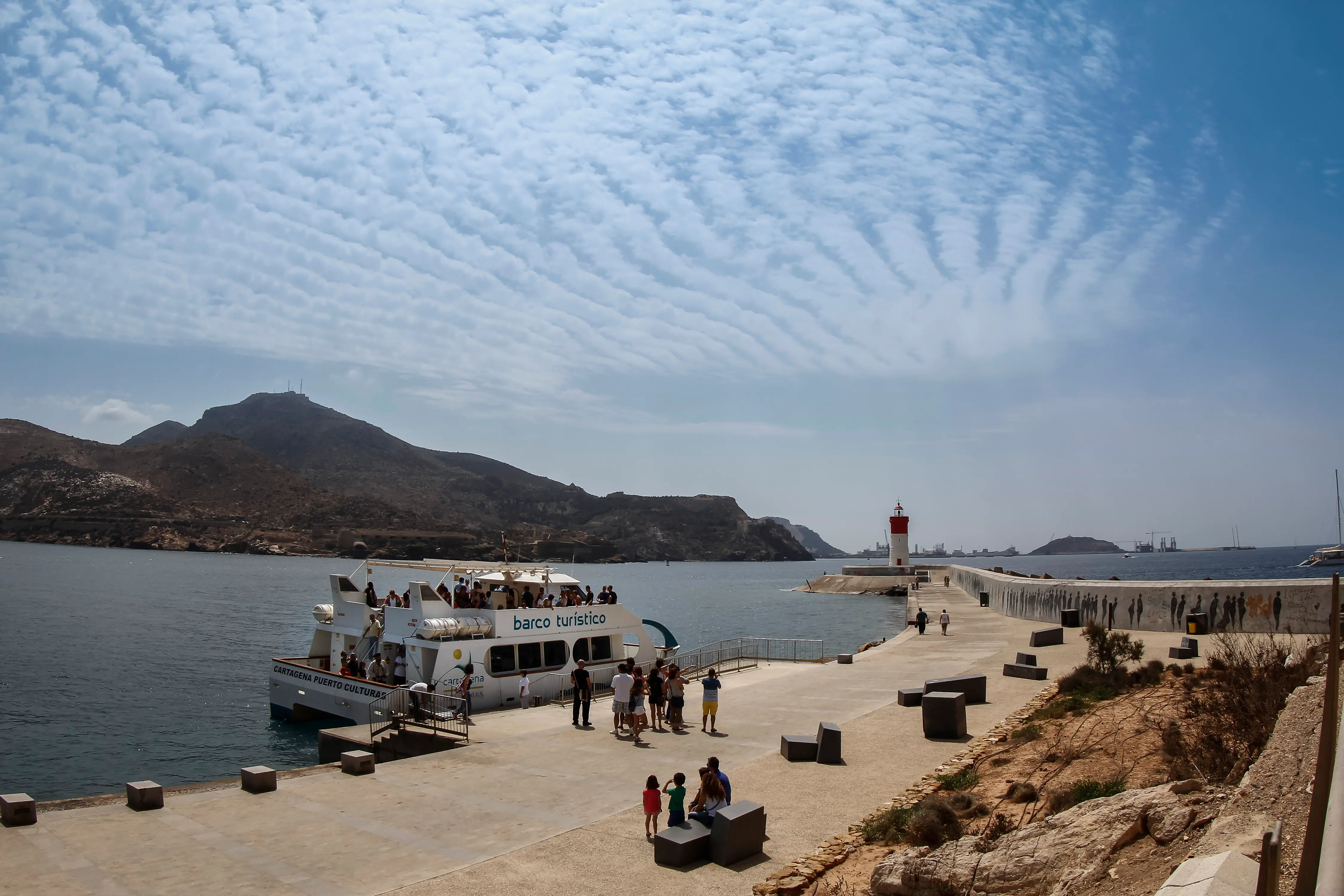
Cartagena, on Spain's south-east coast in the Region of Murcia, sits on a deep natural harbour ringed by hills and fortifications. More about Cartagena →
October 2026 · from today · all times local (Central European Time)
Showing 8 of 8 calls in October
Today and the next 7 days · all times local (Central European Time)
40% busier than a typical day in Cartagena. Busiest 08:00 – 18:00, when 1 ship is alongside.
Thousands of people in port, guests plus crew. Crowd level compared with a typical Cartagena day.
The crowd calendar shows every ship and how busy the port is, hour by hour, plus the quietest and busiest days for the next 90 days.
Juan Sebastian Elcano cruise terminal, Muelle Alfonso XII, Paseo Alfonso XII, 30201 Cartagena, at the edge of the old town. Some ships use the Muelle de la Curra (south side of the harbour) with a shuttle.
36.4 km · ~28 min by car
Typical prices, approximate. Fares change with demand, traffic and time of day.
Typical prices, approximate. Fares change with demand, traffic and time of day.
The old town and the main sights are walkable from the terminal.
2 terminals
Cruise terminal on the Muelle Alfonso XII at the edge of the old town; a new terminal building of up to 700 m2 (3,000 passengers/hour disembarking) is being procured.
Second cruise berth on the south side of the harbour; passengers take a shuttle bus to town.
Port of call; no cruise parking.
Pick the area first. Typical nightly prices, approximate.
Walk to the ship and the Roman sights.
Typical hotel
1.1 km and about 5 min to the terminal; 36.4 km and about 28 min to RMU.
Modern centre near the railway and bus stations.
Typical hotel
2.2 km and about 8 min to the terminal; 34.9 km and about 26 min to RMU.
Prices are approximate, in EUR. Breakfast up to about €30. Drinks are from an old-town café: the soft-drink price is for a bottled tonic water and the water price is for sparkling water (Vichy), as no cola or still water was listed.
Main pedestrian street of the old town with bars, cafes and restaurants.
Old-town square with terraces and tapas bars.
Waterfront promenade next to the cruise terminal, with restaurants including the yacht club.
Cartagena, on Spain's south-east coast in the Region of Murcia, sits on a deep natural harbour ringed by hills and fortifications. Cruise ships dock at the Juan Sebastian Elcano terminal on the Muelle Alfonso XII, a few minutes' walk from the old town. In 2025 the port handled more than 257,000 cruise passengers on over 185 calls, and about 200 calls are forecast for 2026.
The city has 3,000 years of history, from Hasdrubal's Punic Qart Hadast to Roman Carthago Nova. The Roman Theatre, rediscovered in 1990 and now part of a museum by Rafael Moneo, is the closest sight to the ship. A panoramic lift climbs to Concepcion Castle for views over the harbour.
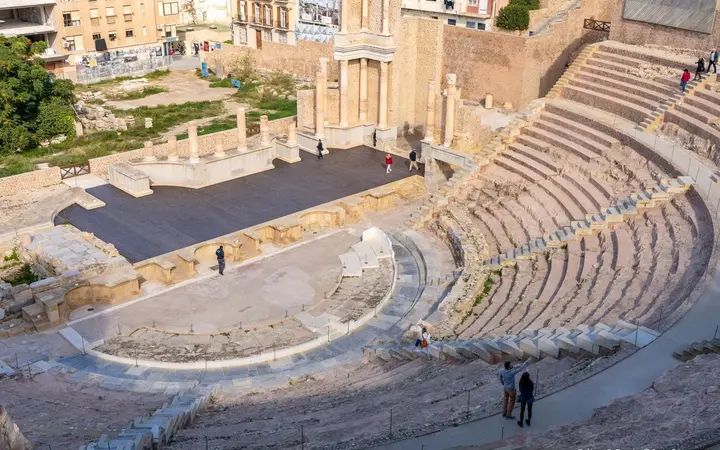
Designed by Rafael Moneo, the museum leads from the Palacio de Riquelme through tunnels under the street and the medieval church of Santa Maria to the Roman Theatre, built under Augustus, rediscovered in 1990 and one of the largest in Roman Hispania, with seats for 7,000.
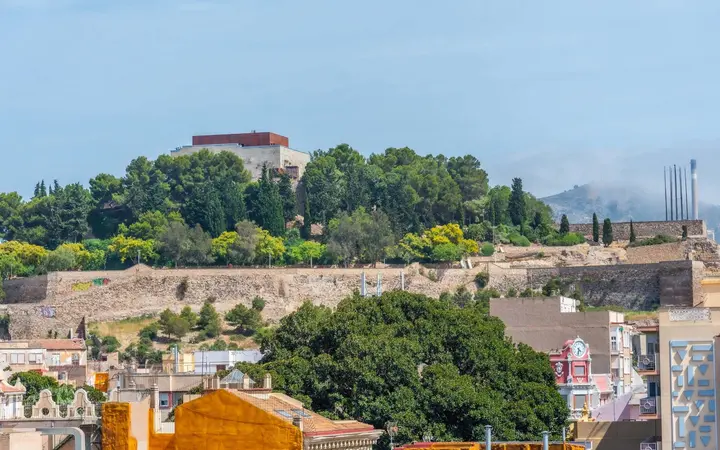
The fortress on Concepcion hill houses the Interpretation Centre of Cartagena's History, covering 3,000 years, and gives the best panoramic views of the city and its natural harbour. The panoramic lift saves the walk up.
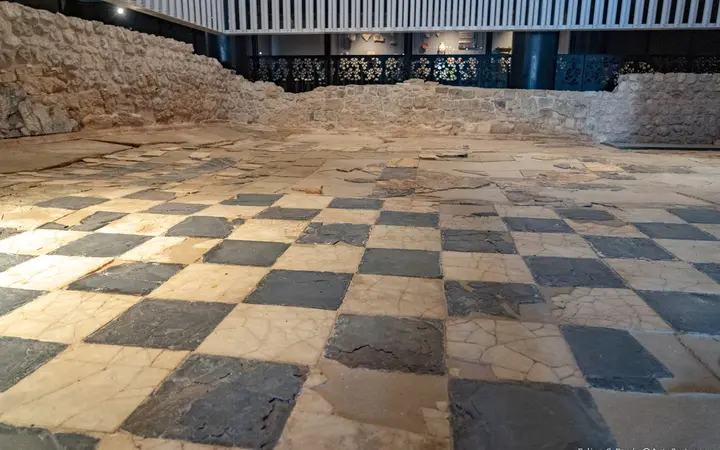
Entrance to one of the largest urban archaeological parks in Spain, on Cerro del Molinete. The visit takes in the Curia with its marble floor, the Colonial Forum, the Sanctuary of Isis, Roman streets with cart tracks, the port baths and the painted Atrium Building.
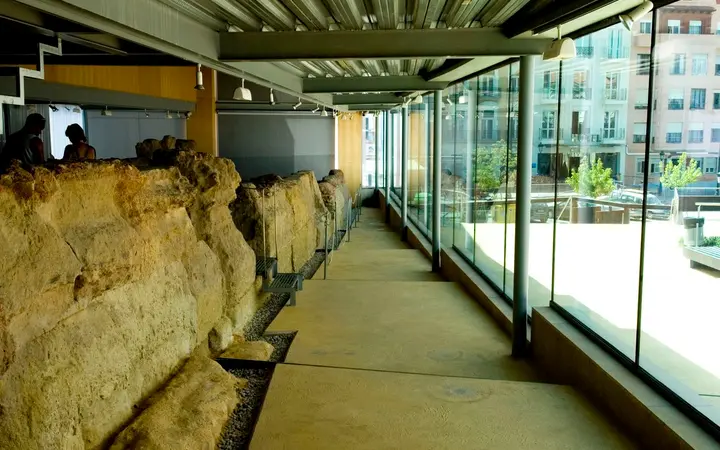
One of the few Carthaginian remains in Spain, from Qart Hadast, founded by Hasdrubal in 229 BC. Next to the wall is the 16th–17th-century crypt of the San Jose hermitage, painted with a Dance of Death.