Split Passenger Terminal (Gat sv. Duje)
The city harbour's passenger terminal and main cruise pier, shared with domestic ferry traffic. The Port Authority lists 10 cruise berths of 150–265 m across the harbour; berth assignments vary by ship.
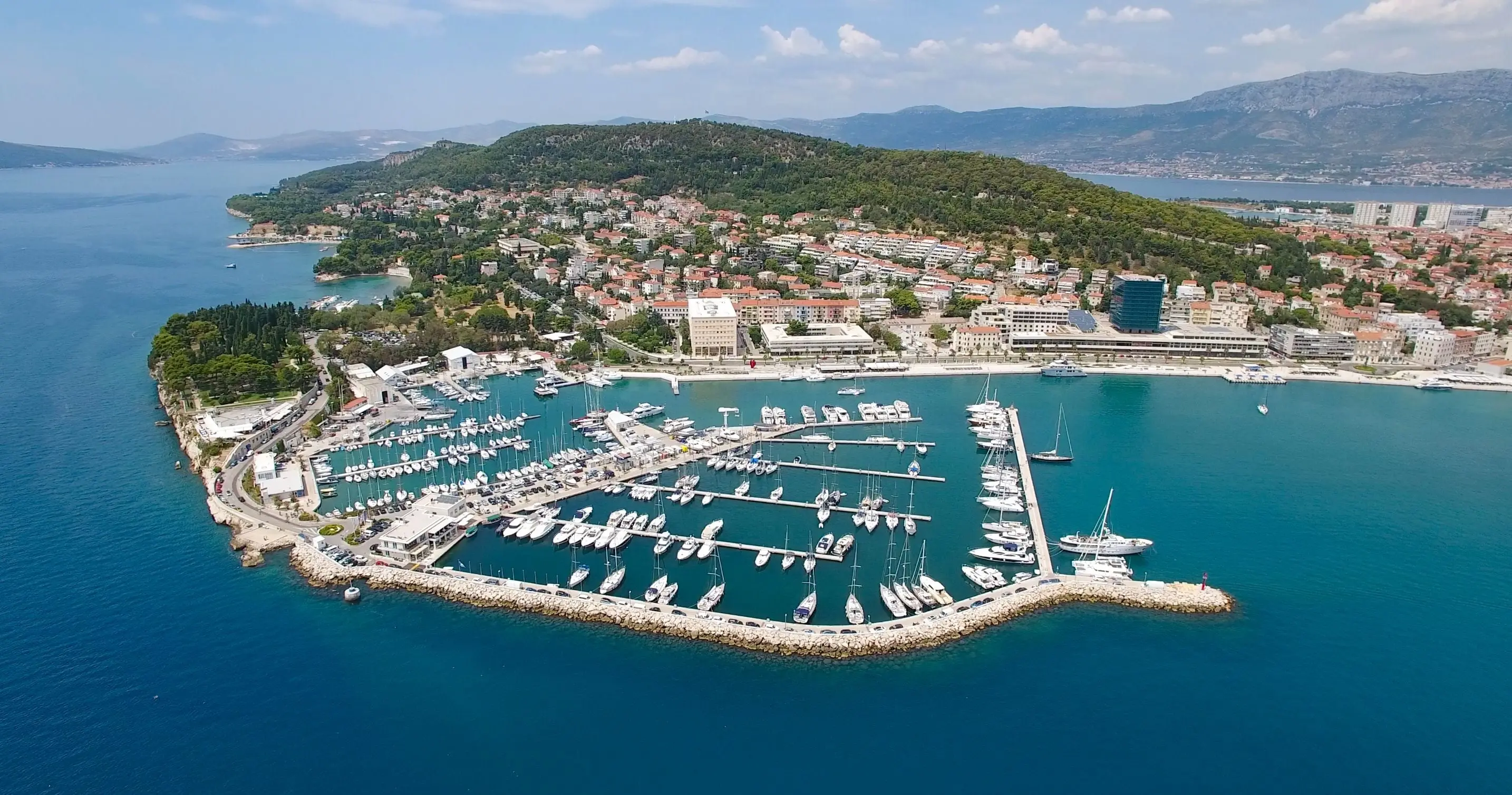
Split is Croatia's second city and the main gateway to central Dalmatia, set on a peninsula between the Adriatic and the wooded Marjan hill. More about Split →
October 2026 · from today · all times local (Central European Time)
Showing 10 of 12 calls in October
Today and the next 7 days · all times local (Central European Time)
94% busier than a typical day in Split. Busiest 08:00 – 16:00, when all 2 ships are alongside.
Thousands of people in port, guests plus crew. Crowd level compared with a typical Split day.
The crowd calendar shows every ship and how busy the port is, hour by hour, plus the quietest and busiest days for the next 90 days.
Cruise ships berth in Split's city harbour (Gradska luka), which also handles the Brac, Hvar and Solta ferries. The Port of Split Authority lists 10 cruise berths, mainly on the Gat sv. Duje pier and the outer side of the breakwater (Lukobran). The passenger terminal is on Gat sv. Duje.
From Gat sv. Duje it is a flat, unshaded walk of about 900 m (about 10 min) to the Bronze Gate of Diocletian's Palace and about 1 km to the Riva. Outer breakwater berths add a few minutes. The berth is set by the Port and varies by ship. An anchorage is available, and some larger ships may tender to the Riva on busy days.
Outer breakwater (Lukobran) berths has no map position yet.
1 km · 10–15 min by car
Almost everyone walks: follow the harbour front north-west to the Riva, where the Bronze Gate leads straight into the palace cellars. The route is flat but has no shade.
Typical prices, approximate. Fares change with demand, traffic and time of day.
Typical prices, approximate. Fares change with demand, traffic and time of day.
Split bus station (Autobusni kolodvor) and the ferry terminal are right beside the cruise harbour. Promet single-ticket fares changed on 1 June 2026, and tickets cost about twice as much when bought from the driver. Ride-hailing (Uber, Bolt) and Wizi taxis show fares upfront. Ferries and catamarans to Brac, Hvar and Solta leave from the same harbour.
2 terminals
The city harbour's passenger terminal and main cruise pier, shared with domestic ferry traffic. The Port Authority lists 10 cruise berths of 150–265 m across the harbour; berth assignments vary by ship.
Two berths on the outer side of the harbour breakwater, completed in 2016–2017 for ferries and cruise ships of up to about 320 m and 270 m. Generally used by larger ships; the walk to the old town is a few minutes longer.
Split is used mainly as a port of call; passengers arrive by ship and explore on foot. The harbour is busy with ferry traffic and the old town around Diocletian's Palace is pedestrianised. No cruise parking was found.
Pick the area first. Typical nightly prices, approximate.
Old town at the doorstep
Typical hotel
Heritage hotels and rooms just west of the palace and the Riva.
Beach next to the port
Typical hotel
Rooms and boutique hotels by Bačvice beach, a short walk from the cruise berths.
Port times are measured by car to the cruise berths; the old town is walkable.
Prices are approximate. Croatia uses the euro.
Waterfront promenade of cafes along the palace's south wall.
Konobas and bars in the lanes inside the palace walls.
Small family taverns in the old fishermen's quarter.
Beach cafes and casual restaurants by the beach near the port.
Split is Croatia's second city and the main gateway to central Dalmatia, set on a peninsula between the Adriatic and the wooded Marjan hill. Its old town grew inside the walls of Diocletian's Palace, the Roman emperor's retirement residence of around AD 305, and is now a UNESCO World Heritage Site where people still live, shop and eat among Roman columns, medieval lanes and the cathedral built into the emperor's mausoleum. In front of the palace's south wall, the palm-lined Riva promenade is the city's open-air living room, busy with cafes from morning to night.
Ships berth in the city harbour, a short walk from the palace. Within easy reach are the Marjan forest park with viewpoints and beaches, the island-town of Trogir (also UNESCO-listed), Roman Salona, Klis Fortress, and ferries to Brac and Hvar.

Walk through the Bronze Gate into the emperor's Roman palace, now Split's lived-in old town, with the Peristyle, the cathedral in Diocletian's mausoleum and the vaulted substructures (cellars). The streets are free; the cellars cost EUR 10 for adults (open 08:30–20:00), and cathedral, bell-tower and crypt tickets are sold separately.
Stroll or sit with a coffee on the palm-lined promenade in front of the palace's south wall, Split's main meeting place and a 10–15 minute walk from the berths.
Climb from the Varos quarter into the pine-forested Marjan park for views over the old town, the harbour and the islands, or continue to its quiet coves. Free, but allow about an hour each way on foot from the ship.
Take the bus, a boat or a taxi to Trogir, a UNESCO-listed medieval town on a small island with the Cathedral of St Lawrence and a seafront lined with palms. It is about 45 minutes by road from the port, so it suits a longer call.