Cruise Passenger Terminal (Pier IV–V)
Purpose-built cruise terminal opened in 2017 (about 2,500 m2) with passport control and security, used for homeport and transit calls; passengers reach it by free port shuttle from the berth.
Not on the map yet
Heraklion (also spelled Iraklion) is the largest city and administrative capital of Crete and the fourth-largest city in Greece, with a municipal population of about 179,000 (2021). More about Heraklion →
October 2026 · from today · all times local (Eastern European Time)
Showing 7 of 7 calls in October
Today and the next 7 days · all times local (Eastern European Time)
59% quieter than a typical day in Heraklion. Busiest 08:00 – 16:00, when 1 ship is alongside.
Thousands of people in port, guests plus crew. Crowd level compared with a typical Heraklion day.
The crowd calendar shows every ship and how busy the port is, hour by hour, plus the quietest and busiest days for the next 90 days.
Ships dock alongside in the commercial Port of Heraklion, east of the old Venetian harbour, at cruise berths on Piers II, III and IV–V; up to five cruise ships can berth at once. The Port Authority runs two passenger terminals, including the 2017 Cruise Passenger Terminal at Pier IV–V used for homeport operations. Walking inside the working port is not permitted, so a free shuttle bus runs from the berth to the terminal.
From the passenger terminal on Leoforos Nearchou it is about 2 km on foot (around 25–30 minutes) along the waterfront to Koules, the Archaeological Museum and Lions Square. Pier assignment varies by ship.
Cruise Passenger Terminal (Pier IV–V) has no map position yet.
2–3 km · 10–30 min by car
Most passengers walk west along the waterfront past Koules and the Venetian arsenals, then up 25 August Street to Lions Square (about 2 km, 30 min on foot; about 3 km, 10 min by road). Free CityBus 91 (Red line) runs from Leoforos Nearchou to Eleftherias Square by the Archaeological Museum.
Typical prices, approximate. Fares change with demand, traffic and time of day.
Typical prices, approximate. Fares change with demand, traffic and time of day.
Passengers may not walk inside the working port; the Port Authority shuttle links the berth with the passenger terminal. Adapted electric vehicles are provided for passengers with reduced mobility.
2 terminals
Purpose-built cruise terminal opened in 2017 (about 2,500 m2) with passport control and security, used for homeport and transit calls; passengers reach it by free port shuttle from the berth.
The Heraklion Port Authority describes tour-bus and passenger loading areas at the cruise piers, but no official or private cruise-passenger car park with published rates was found.
Terminals at Piers II and IV–V have ramped entrances.
Pick the area first. Typical nightly prices, approximate.
Walking to port and museums
Typical hotel
Central hotels near Lions Square, the Venetian harbour and the Archaeological Museum.
Beach stay near the city
Typical hotel
Beach hotels west of the city, about 20 minutes from the port.
Port times are measured to the cruise piers. Rates rise sharply in summer.
Prices are approximate. Service is usually included; rounding up is customary.
Cafes and tavernas on the main street up from the port.
Fish tavernas by the Koules fortress, walkable from the piers.
Beach bars and tavernas near the beach hotels.
Cafes and fish restaurants by Koules, on the walk from the passenger terminal.
Heraklion (also spelled Iraklion) is the largest city and administrative capital of Crete and the fourth-largest city in Greece, with a municipal population of about 179,000 (2021). It sits on Crete's north coast, and its historic centre is ringed by Venetian walls and bastions that withstood a 21-year siege before the city fell to the Ottomans in 1669.
The old harbour is guarded by the Koules sea fortress and the Venetian arsenals, while Lions Square with the 1628 Morosini Fountain, the loggia and Saint Titus Church mark the centre. The Archaeological Museum holds one of the world's main Minoan collections, and the Palace of Knossos lies on the city's southern edge, making Heraklion Crete's principal gateway for cruise visitors.

The largest Minoan palace site, with partly reconstructed halls and frescoes, 7 km south of the port and reachable by city bus line 2. Timed entry costs EUR 20 (EUR 10 reduced); arrive early to avoid cruise-tour crowds.
One of the world's key Minoan collections, including the original Knossos frescoes, about 2 km on foot from the passenger terminal. Admission EUR 20; summer hours 08:00–20:00 (Wednesdays from 13:00) until 31 October 2026.
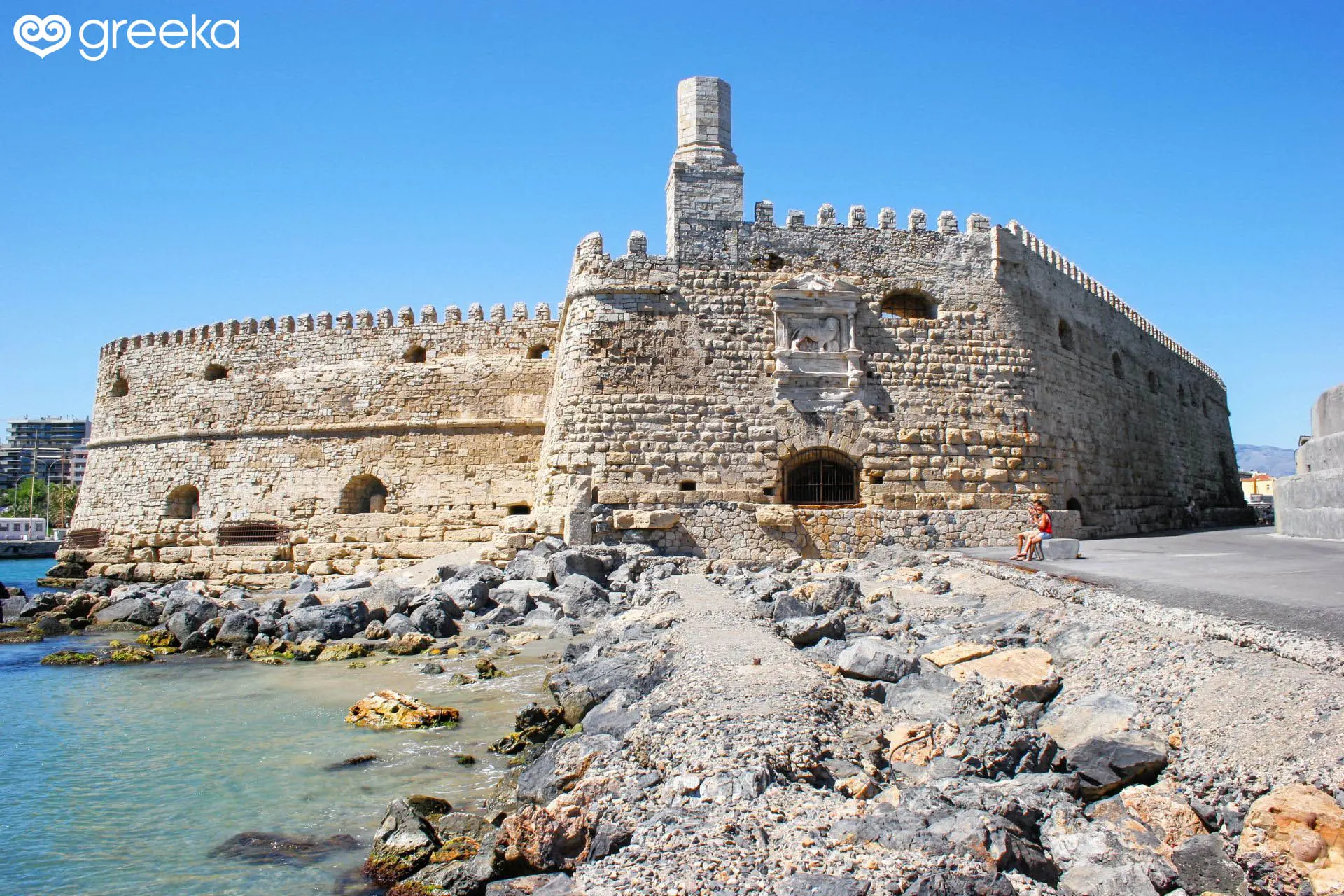
The Venetian sea fortress (Rocca a Mare) guards the old harbour beside the vaulted Venetian arsenals, on the waterfront walk into town about 2 km from the terminal.
The 1628 Morosini Fountain with its four lions anchors the centre, next to the Venetian Loggia, Saint Mark's Basilica and Saint Titus Church, all within a short walk.