North Pier (Town Pier)
Pier closest to central Kralendijk; its exit gates open onto a pedestrian street opposite Wilhelmina Park. Berth assignment varies by day.
Kralendijk is the small, colourful capital of Bonaire, the arid easternmost of the ABC islands and a special municipality of the Netherlands. More about Kralendijk →
October 2026 · from today · all times local (Atlantic Standard Time)
Showing 5 of 5 calls in October
Today and the next 7 days · all times local (Atlantic Standard Time)
Thousands of people in port, guests plus crew. Crowd level compared with a typical Kralendijk day.
The crowd calendar shows every ship and how busy the port is, hour by hour, plus the quietest and busiest days for the next 90 days.
Ships dock alongside one of two piers on Kralendijk's waterfront: the North Pier (Town Pier), whose gates open onto a pedestrian street opposite Wilhelmina Park, or the South Pier (Customs Pier), often used by larger ships. No tendering is needed. From the South Pier, Plaza Wilhelmina is about 400 m (6 minutes) on foot, and the Klein Bonaire water taxi at Karel's Beach Bar is about 650 m (9 minutes); from the North Pier it is under 300 m.
Taxis, restrooms and tourist information are in the port area. The pier is set by the day's berthing plan.
0 km · 4–6 min by car
Both piers open directly onto the waterfront boulevard, so passengers simply walk into town; Plaza Wilhelmina, Fort Oranje and Kaya Grandi are a few minutes away on flat streets.
Typical prices, approximate. Fares change with demand, traffic and time of day.
Typical prices, approximate. Fares change with demand, traffic and time of day.
Bonaire has no public buses; getting around is by taxi, tour, rental car, scooter or golf cart. Taxis are unmetered with fixed government fares in USD (TX on the plate); the official fare between Kralendijk and Flamingo International Airport (BON) is USD 15, about 3 km and 7 minutes by road. Lac Bay's Sorobon Beach is about 12 km and 15 minutes from the South Pier.
2 terminals
Pier closest to central Kralendijk; its exit gates open onto a pedestrian street opposite Wilhelmina Park. Berth assignment varies by day.
Also called the Customs Pier and often used by larger ships, next to the South Pier Mall and less than 100 m from the seaside promenade. Berth assignment varies by day.
Kralendijk is a port of call, not an embarkation port, so there's no cruise parking. Taxis and tour vehicles collect passengers on the waterfront.
Pick the area first. Typical nightly prices, approximate.
Diving resorts by town
Typical hotel
Dive resorts and small hotels along the coast either side of town, minutes from the piers.
Bonaire uses the US dollar.
Prices are approximate. Bonaire uses the US dollar.
Seafront cafes and restaurants a few minutes' walk from both piers.
Main shopping street with cafes and lunch spots.
Seafront promenade of cafes, beach bars and restaurants, including Karel's Beach Bar, a few minutes' walk from both piers.
Small mall next to the South Pier with shops and a restaurant.
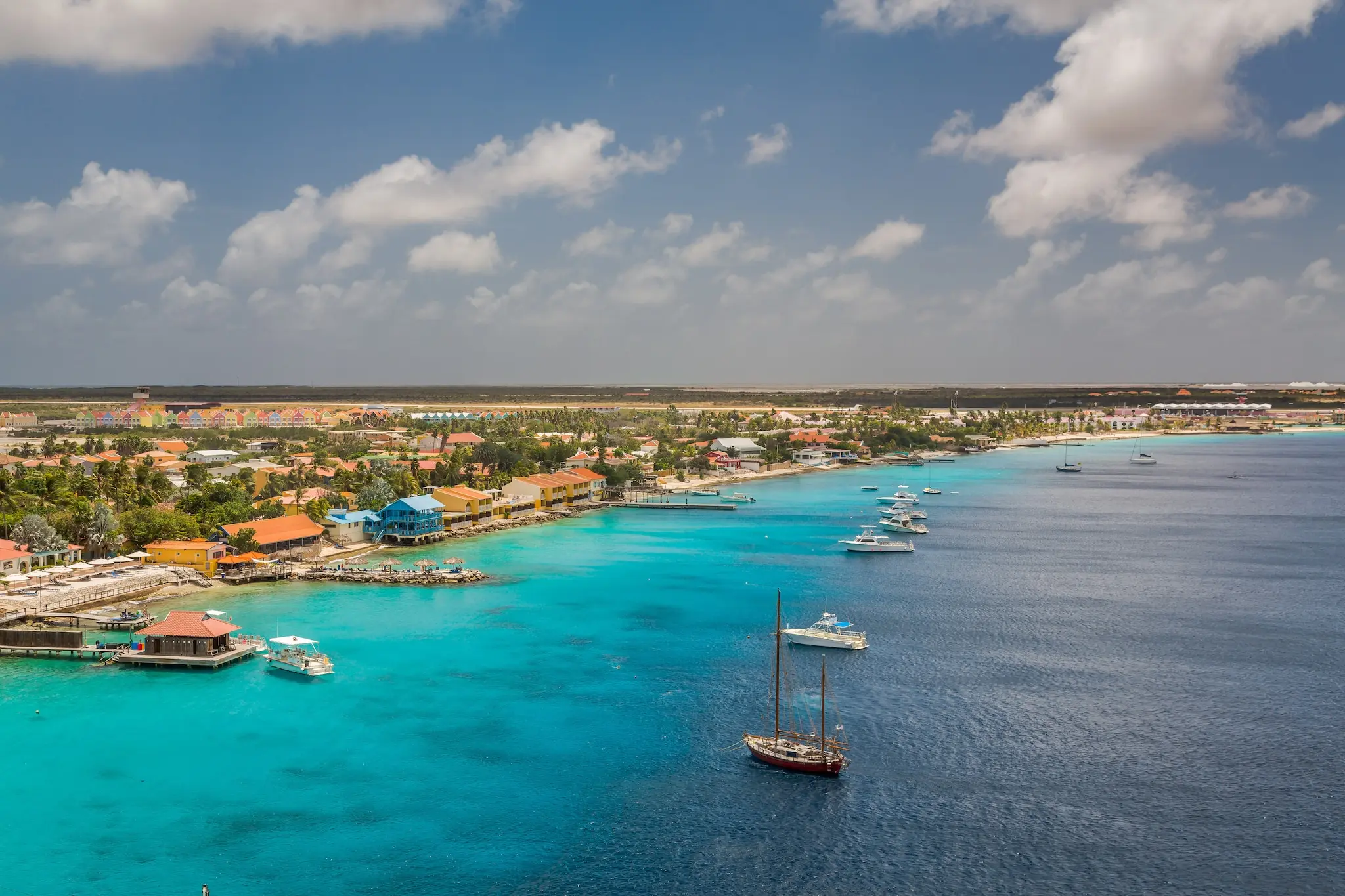
Kralendijk is the small, colourful capital of Bonaire, the arid easternmost of the ABC islands and a special municipality of the Netherlands. Its low pastel waterfront, the old Fort Oranje and the shops of Kaya Grandi sit on a sheltered bay facing uninhabited Klein Bonaire. Bonaire is best known underwater: the whole coastline is a protected marine park, and its fringing reefs make it one of the Caribbean's most celebrated shore-diving and snorkelling islands.
On land, the north is covered by the cactus scrub, salt lakes and limestone hills of Washington Slagbaai National Park, while the flat south has pink salt pans, white salt mountains, flamingos and 19th-century slave huts. On the windward coast, shallow Lac Bay is ringed by mangroves and draws windsurfers. US dollars, Dutch and Papiamentu culture, and a calm pace define a cruise day here.
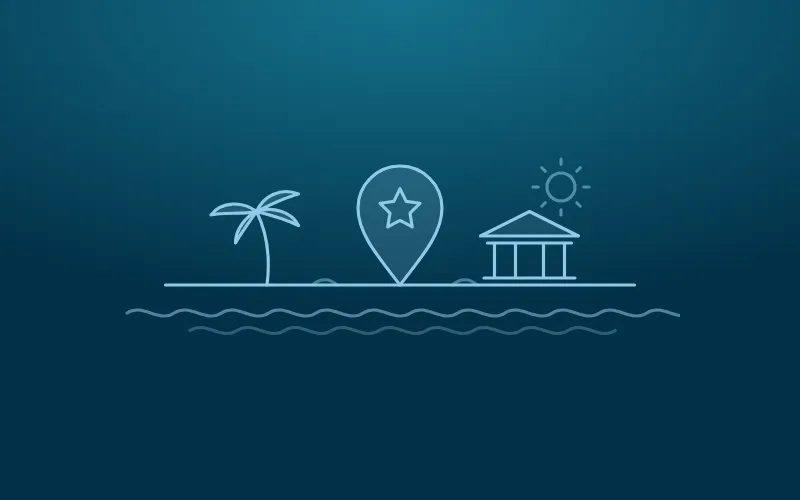
An uninhabited island just off Kralendijk, part of the marine park, with the white sand of No Name Beach and reef snorkelling straight from the shore. The water taxi leaves a few minutes' walk from the piers; there are no facilities, so bring water and shade. Whether cruise passengers need a marine park nature fee for snorkelling is reported inconsistently, so check with your water-taxi or tour operator.
The flat south coast has pink salt pans, white salt mountains and flamingos seen from the road near the Pekelmeer sanctuary. The 1850 coral-stone slave huts recall the enslaved salt workers. A 25-minute drive, it fits easily into a normal call.
A shallow, mangrove-fringed bay on the windward coast, protected as a Ramsar wetland, where Sorobon Beach is a renowned windsurfing spot with lessons for beginners. It is about 15 minutes' drive from the piers and pairs well with the salt pans.
Bonaire's northern national park of cactus scrub, salt lakes, rugged coves and Brandaris hill, explored on rough roads. Cruise passengers pay a USD 10 day fee; it needs a full day and closes on Mondays, so it suits only long calls.