Pier B
Privately owned berth beside downtown, behind the Opal Key Resort; it takes most large cruise ships. Its contract allows up to seven ships a week. It has no terminal building, and passengers walk ashore.
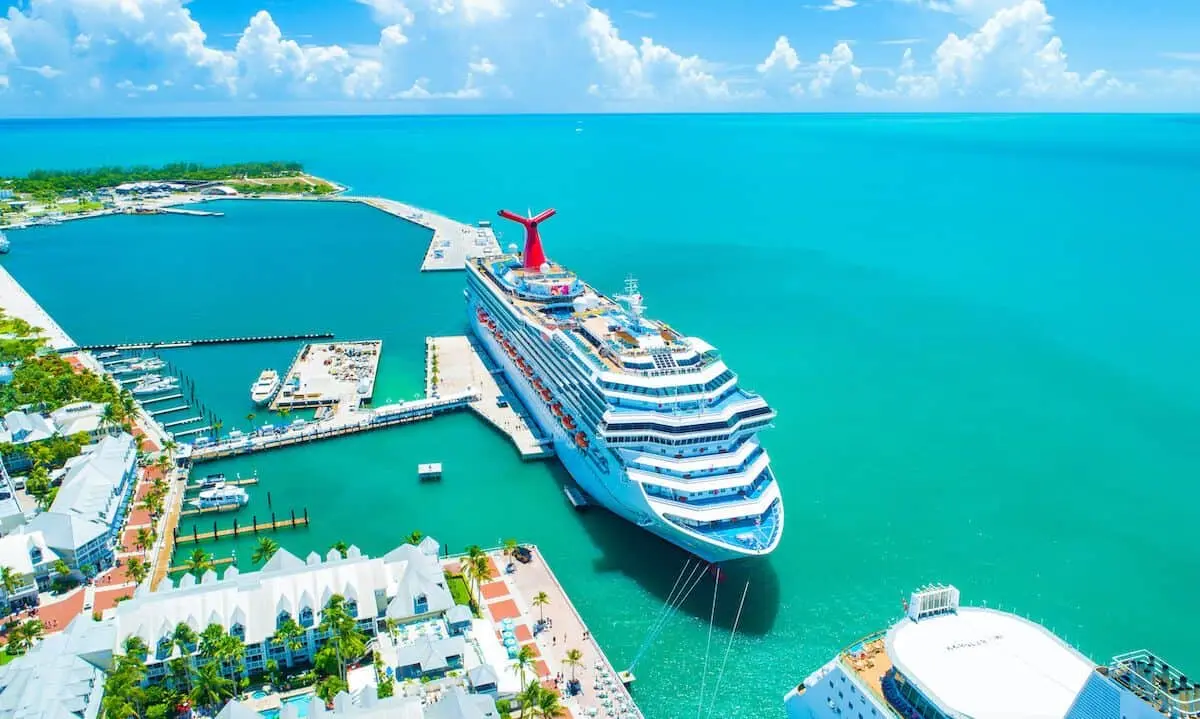
Key West is the southernmost city in the continental United States, set on a small coral island at the end of the Florida Keys, about 90 miles from Cuba. More about Key West →
October 2026 · from today · all times local (Eastern Time)
Showing 6 of 6 calls in October
Today and the next 7 days · all times local (Eastern Time)
13% quieter than a typical day in Key West. Busiest 07:00 – 16:00, when 1 ship is alongside.
Thousands of people in port, guests plus crew. Crowd level compared with a typical Key West day.
The crowd calendar shows every ship and how busy the port is, hour by hour, plus the quietest and busiest days for the next 90 days.
Ships dock alongside at the edge of Old Town. Most large ships use privately owned Pier B, behind the Opal Key Resort. It is about 400 m (6 minutes) on foot to the foot of Duval Street. Smaller ships may use the city's Mallory Square Dock, which sits directly on Mallory Square, about 340 m (5 minutes) from Duval Street.
Under the city's One Ship Policy they do so only when Pier B is empty. There is no conventional terminal building; passengers walk straight off. The Navy's Outer Mole has not taken cruise ships since 2020. Hemingway Home is about 1.3 km away and the Southernmost Point about 2 km.
0.3–0.4 km · 5–6 min by car
Almost everyone walks. From Pier B, exit toward Front Street and turn onto Duval. From Mallory Square Dock, cross Front Street into Duval.
Typical prices, approximate. Fares change with demand, traffic and time of day.
Typical prices, approximate. Fares change with demand, traffic and time of day.
Old Town is compact and flat; most passengers walk. The free Duval Loop bus has been suspended since 1 Jan 2026 and its stops are now served by the on-demand Key West Rides service. Bring your ship card and photo ID; both are needed to get back onto the piers.
2 terminals
Privately owned berth beside downtown, behind the Opal Key Resort; it takes most large cruise ships. Its contract allows up to seven ships a week. It has no terminal building, and passengers walk ashore.
City-owned berth on Mallory Square at the foot of Old Town. Under the One Ship Policy it is generally used only by smaller ships, and only when no ship is at Pier B.
Key West is a port of call with no cruise embarkation, so no cruise parking applies.
Pick the area first. Typical nightly prices, approximate.
Chain hotels and value
Typical hotel
Chain and resort hotels on North Roosevelt, about 10 minutes by car from the piers.
Port time is measured by car to the Mallory Square pier area.
Prices are approximate. Sales tax is added and tipping is customary.
Main strip of cafes and restaurants a few minutes' walk from the piers.
Snack stands and casual waterfront spots at the piers.
Key West is the southernmost city in the continental United States, set on a small coral island at the end of the Florida Keys, about 90 miles from Cuba. Its Old Town is a grid of 19th-century wooden houses, Bahamian- and Cuban-influenced architecture, and shady streets around Duval Street, the island's main shopping, bar and restaurant strip. Visitors know it for Ernest Hemingway's former home, the Southernmost Point buoy, Mallory Square's sunset gatherings, Cuban coffee and Key lime pie, and wild chickens on the streets.
Coral reefs offshore draw snorkelers and divers. It is one of the most visited cruise calls in Florida, mostly on short Caribbean and Bahamas itineraries.
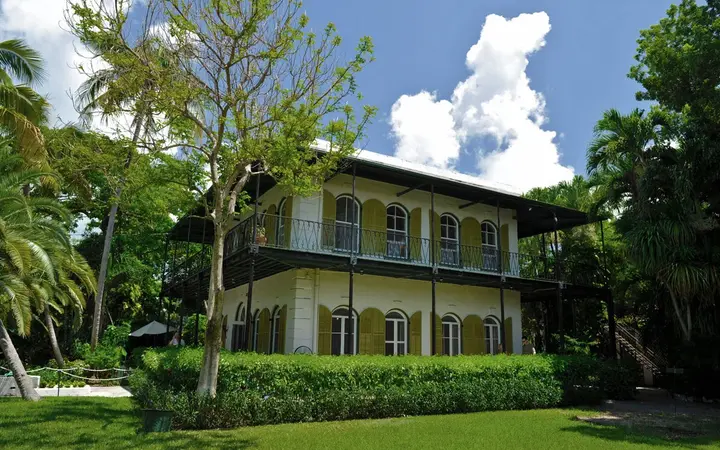
The Spanish Colonial house where Hemingway lived and wrote in the 1930s, toured with a guide and home to dozens of six-toed cats; about a 20-minute walk from either pier. Admission is USD 19 for adults, bought at the gate.
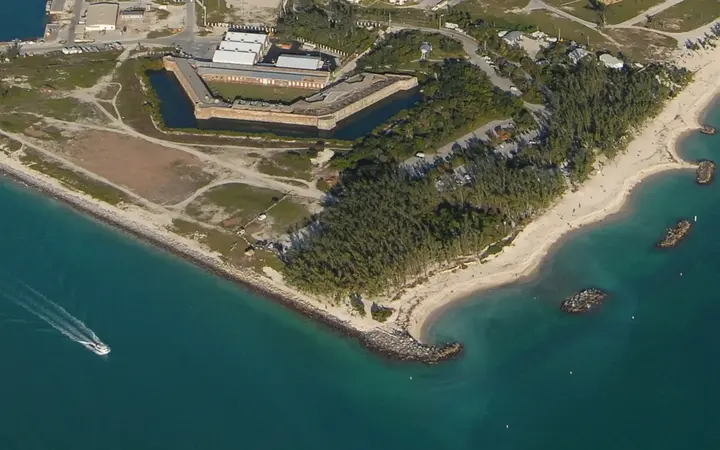
A Civil War-era brick fort and the island's best beach, about 25-30 minutes on foot from the piers. Pedestrian entry is USD 2.50 and the fort closes at 5 pm. The beach is rocky, so water shoes help.
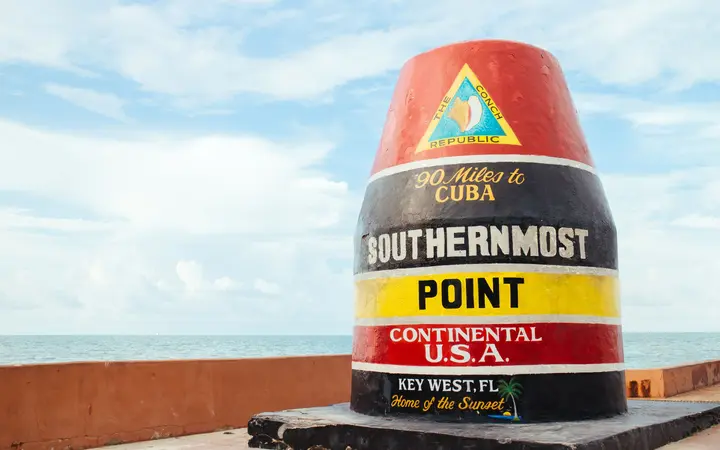
Walk the island's famous shopping and dining street from the pier end to the Atlantic, finishing at the striped Southernmost Point buoy, '90 miles to Cuba'. The full walk is about 2 km.
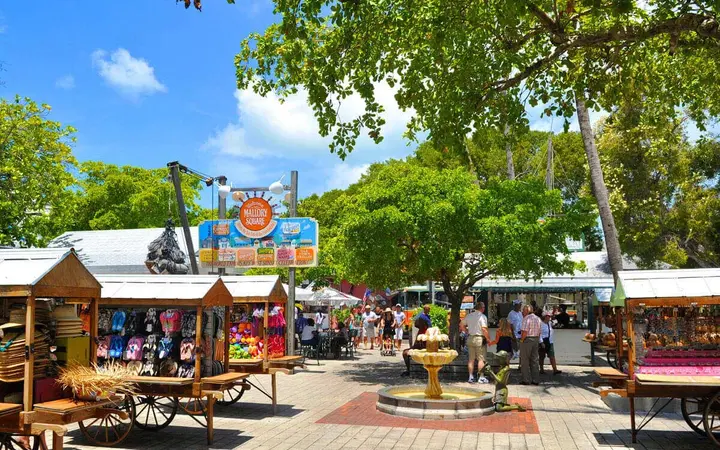
The historic waterfront square beside the piers, with street performers, shops and the Old Town Trolley's first stop. The famous sunset celebration usually starts after ships have sailed.