Railroad Dock
Skagway's largest berth, owned by White Pass, with forward and aft berths on the eastern shore. Closed to pedestrians since 2022 due to rockslides, so passengers use a pier shuttle or water taxi.
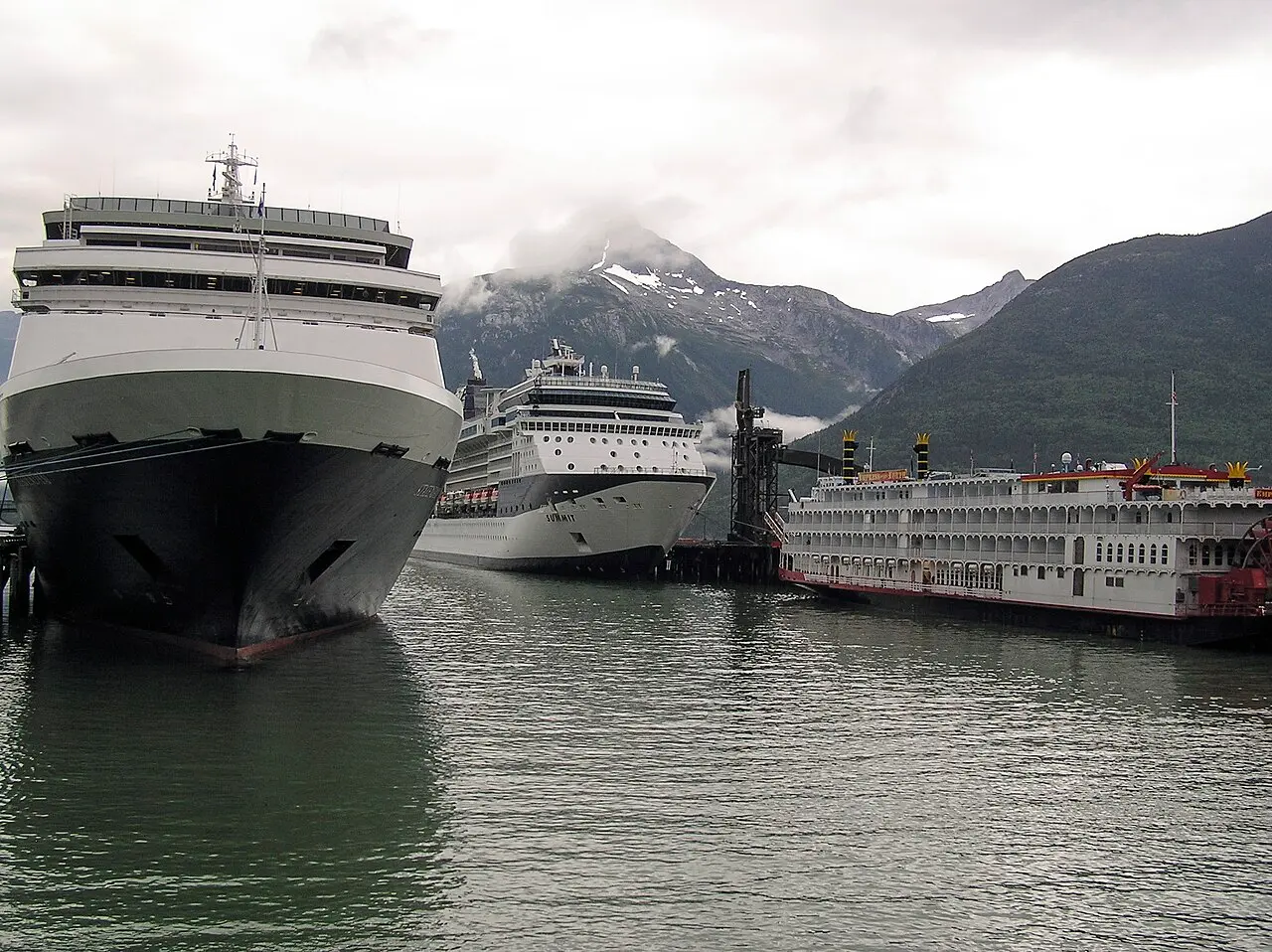
Skagway is a small town of about 1,200 residents at the head of Taiya Inlet, the northern end of the Inside Passage, hemmed in by steep mountains. More about Skagway →
October 2026 · from today · all times local (Alaska Time)
No more ships are scheduled in Skagway this month
Try another month.
Today and the next 7 days · all times local (Alaska Time)
Thousands of people in port, guests plus crew. Crowd level compared with a typical Skagway day.
The crowd calendar shows every ship and how busy the port is, hour by hour, plus the quietest and busiest days for the next 90 days.
Ships berth at three docks at the south end of town, assigned by ship and day.
Broadway Dock and the municipal Ore Dock are a flat 6–12 minute walk from the historic district and the train depot.
Railroad Dock, the largest, has been closed to pedestrians since 2022 because of rockslides: passengers at the aft berth ride a shuttle off the pier, and those at the forward berth take a short water taxi to the Small Boat Harbor. White Pass trains can load beside Railroad and Broadway docks.
1 km · 5–15 min by car
Most passengers walk into town along Broadway from Broadway Dock (about 6 minutes) or Ore Dock (about 12 minutes). Passengers at Railroad Dock first take the pier shuttle or water taxi to the Congress Way / Small Boat Harbor area, then walk or ride the SMART bus.
Typical prices, approximate. Fares change with demand, traffic and time of day.
Typical prices, approximate. Fares change with demand, traffic and time of day.
Skagway is compact and most passengers explore on foot. SMART also runs on-demand trips around the area. Rental cars may not be left in Port and Harbor zones.
3 terminals
Skagway's largest berth, owned by White Pass, with forward and aft berths on the eastern shore. Closed to pedestrians since 2022 due to rockslides, so passengers use a pier shuttle or water taxi.
Central berth at the foot of Broadway, about a 6-minute walk from the train depot and historic district.
Municipal floating dock on the Ore Peninsula west of Broadway Dock, opened in May 2024 for larger ships. It is about a 12-minute walk to the depot.
Skagway is a port of call; cruise passengers arrive by sea and there is no cruise parking. Port staging areas need a Vehicle Access Permit and are for commercial operators.
White Pass Summit Excursion trains have limited lift-equipped space; request it when booking. The Haines fast ferry cannot carry motorized scooters or electric wheelchairs.
Many restaurants and shops open only during the cruise season (May–September). Prices on the brewery menu exclude tax and tip.
Skagway's main street, 5–15 minutes' walk from the docks, lined with cafes, bakeries, saloons and restaurants such as Skagway Brewing Company in restored gold-rush buildings.
Skagway is a small town of about 1,200 residents at the head of Taiya Inlet, the northern end of the Inside Passage, hemmed in by steep mountains.
It boomed in 1897–98 as the gateway to the Klondike Gold Rush, and its false-fronted wooden buildings along Broadway now form part of Klondike Gold Rush National Historical Park. The narrow-gauge White Pass & Yukon Route railway, built in 1898, still climbs from the waterfront to the summit.
It is one of Alaska's busiest cruise ports, with about 1.3 million scheduled passenger visits in 2026.
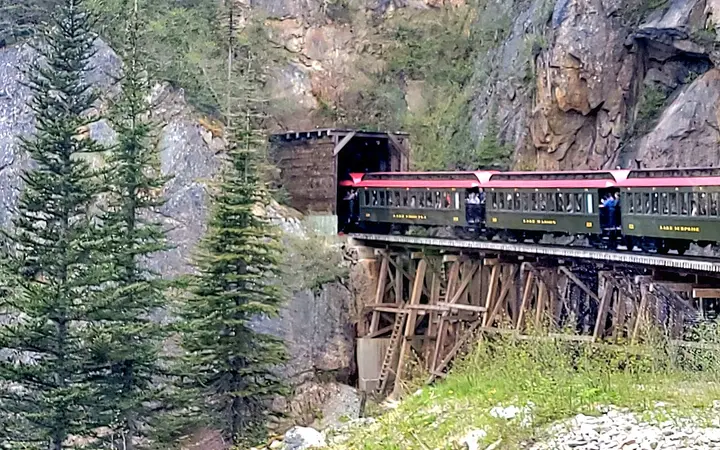
The 1898 narrow-gauge railway climbs about 880 m from tidewater to White Pass Summit past trestles, tunnels and waterfalls. The 2.5–2.75-hour Summit Excursion costs USD 155 per adult (USD 77.50 child) and needs no passport; longer trips into Canada, such as the Bennett Scenic Journey (USD 289), require one.
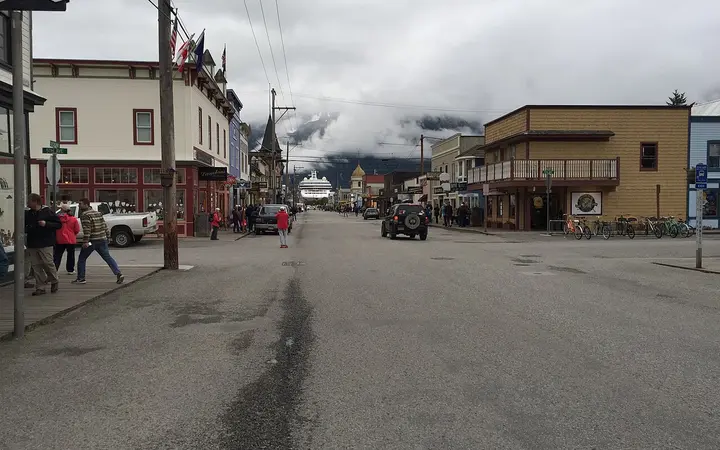
Skagway's historic district preserves more than 20 gold-rush buildings run by the National Park Service, including a visitor center and several free museums. Entry, museums and ranger walks are free, and everything is a short walk from the docks.
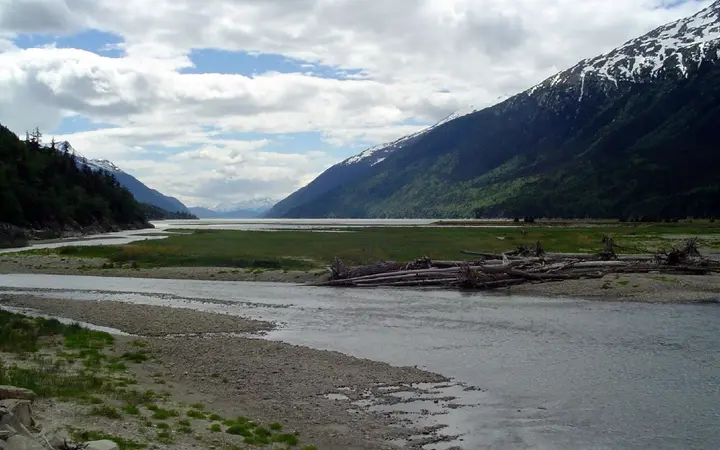
About 15 km (25–30 minutes) from the docks, the tidal flats of Dyea hold the scant remains of the rival gold-rush town and the trailhead of the 33-mile Chilkoot Trail, part of the national historical park. Cruise visitors can walk the first stretch along the Taiya River or join a guided Dyea tour.
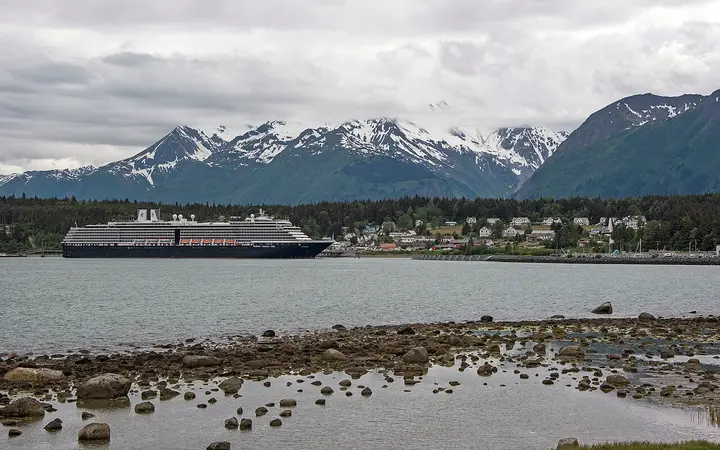
A 45-minute passenger ferry ride down Taiya Inlet past waterfalls leads to Haines, a separate small town on Lynn Canal with the historic Fort William H. Seward. Round trips cost USD 112 per adult in 2026; keep a margin for the return before all-aboard.