Marathonisi (Kranai) islet
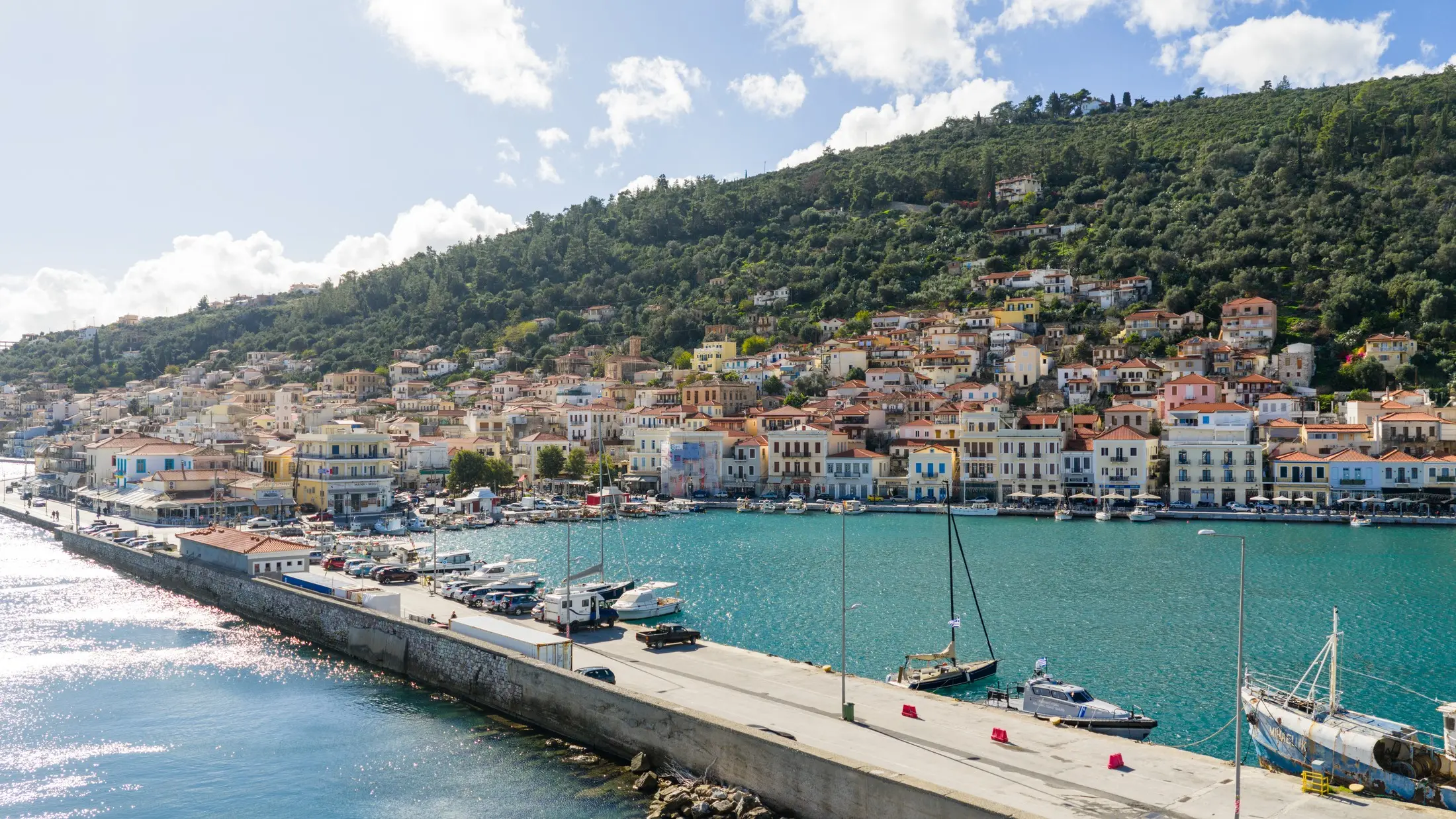
According to legend, Paris and Helen spent their first night here before sailing for Troy. Linked to the town by a causeway, the islet holds the stone Tzanetakis Tower, home to the Historical and Ethnological Museum of Mani, whose collection covers manuscripts, books and old maps of the routes of foreign travellers in Mani. At its far end stands a 22 m white marble lighthouse.
Ancient Theatre of Gythio
At the end of Archaiou Theatrou Street, on the edge of town, the ancient theatre was excavated by the archaeologist Andreas Skias. Its first six rows of marble seats, parts of the seventh and eighth rows and part of the orchestra survive. In summer it hosts the Marathoniseia town festival, with about a month of theatre, music and dance.
Archaeological Site of Mystras
About 7 km north-west of Sparta, Mystras was the capital of the Byzantine Despotate of Morea for two centuries and is a UNESCO World Heritage Site. Paths lead from the lower town past the churches of Agios Dimitrios and Pantanassa, with their frescoes, and the Peribleptos monastery up to the Palace of the Despots and the castle at the top. Tickets EUR 20, reduced EUR 10.
Diros Caves
On the west coast of Mani, the Vlychada Cave, known as the Diros Caves, is one of the most important cave systems in Europe. Most of the visit is by boat through a forest of stalactites and stalagmites, ending with a short walk on land. Tickets for the boat and land route EUR 12, reduced EUR 10.
Archaeological Museum of Sparta
Housed in a 19th-century building by the Danish architect Theophilus Hansen in the centre of Sparta, the museum shows finds from Laconia from the Neolithic age to late Roman times, with pride of place given to the finds from the great Spartan sanctuaries. Tickets EUR 10, reduced EUR 5.
Monemvasia
A Byzantine castle town built on a huge rock rising from the sea, Monemvasia is linked to the mainland only by a narrow causeway, which gave it its name. The lived-in Lower Town has stone-paved lanes, tiled stone houses, arches and coats of arms, with shops and restaurants. The uninhabited Upper Town on top of the rock holds ruined mansions, Ottoman baths, Byzantine churches and old walls with wide sea views.