Syvota
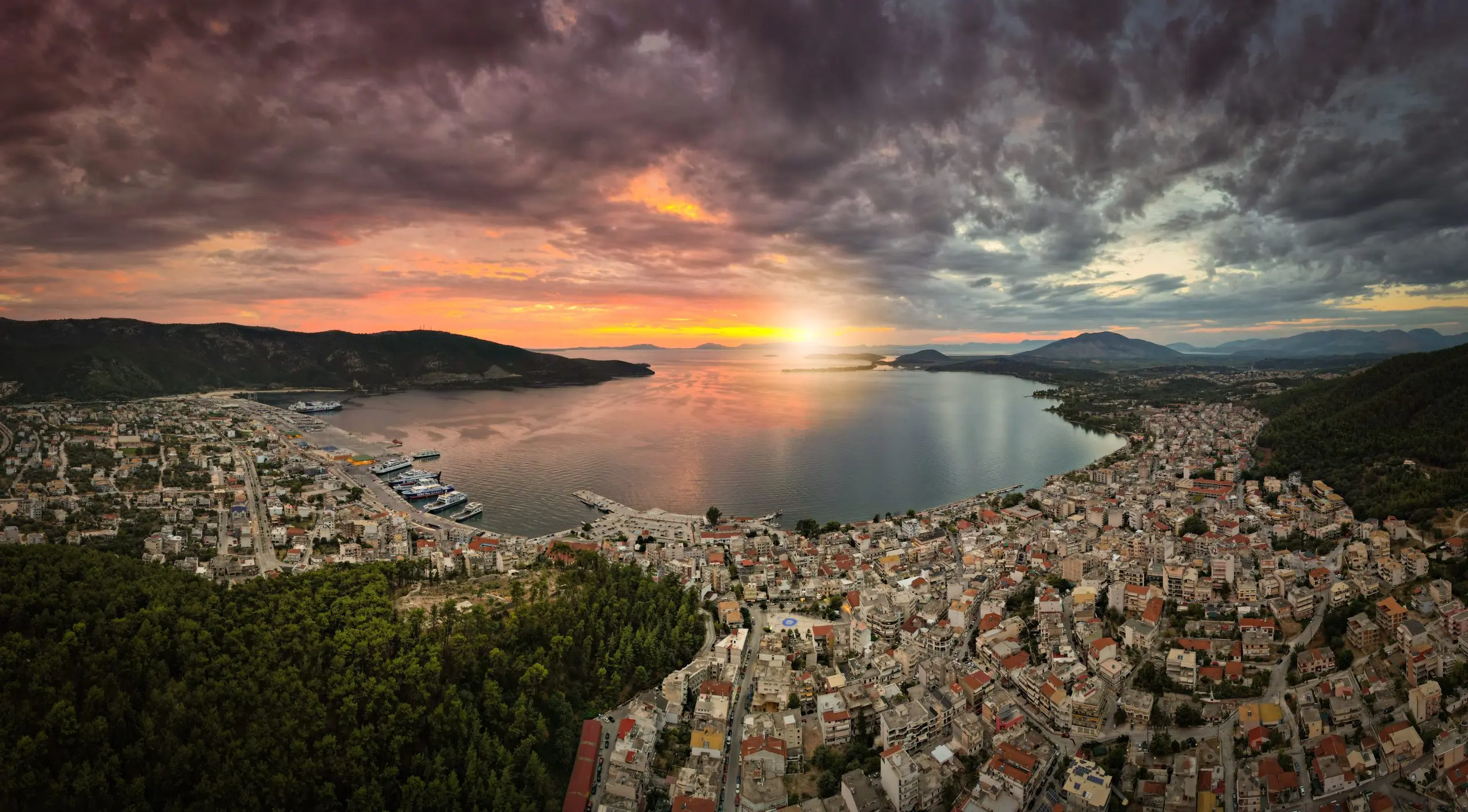
Once a small fishing village, Syvota has grown into a lively resort while keeping its charm. Set on a green, sheltered bay, it faces four uninhabited islets, Agios Nikolaos, Mavro Oros, Megalo Mourtemeno and Mikro Mourtemeno, framed by sandy beaches with clear water and hidden coves. The beaches of Diapori and Alati and the small hidden harbours are best explored by boat, and seaside tavernas serve fresh seafood on the waterfront.
Parga and its Castle
Colourful houses climb the slope below the Castle of Parga, which crowns a rocky headland above the sea. The castle was built mainly under Venetian rule and later strengthened by Ali Pasha, whose acropolis stands at its highest point. A paved stone path leads up from the town in about 8 minutes from the harbour, and the rebuilt barracks near the gate now house a cafe.
Necromanteion of Acheron
One of the most famous oracles of antiquity, the Necromanteion was where pilgrims came to speak with the souls of the dead. It stands where Homer placed the meeting of the Acheron with the Kokytos and Pyriphlegethon, on the shore of the former Acherousian Lake. Built in the late 4th to early 3rd century BC and later burned by the Romans, it has a maze of corridors and an underground crypt cut into the rock. Ticket EUR 10, reduced EUR 5.
Acheron River Springs at Glyki
In the mountains of Souli, about 2 km from the village of Glyki, the springs of the Acheron, the mythical river of the underworld, emerge from the rock. Its clear waters wind through gorges and turquoise pools under old plane trees in a Natura 2000 protected area. An easy trail leads from the Glyki information centre to Skala Tzavelenas and the Cave of the Dragon, and the river is popular for rafting, kayaking and riding in the water.
Archaeological Site of Dodona
The oracle of Zeus and Dione lies in a green valley at the foot of Mount Tomaros, where priests read the god's will in the rustling of a sacred oak. King Pyrrhus gave the sanctuary its monumental form in the 3rd century BC, adding temples, a council house and a stadium, and a theatre for almost 18,000 spectators, then the largest of its time. The restored theatre now hosts performances and the Dodona Festival. Ticket EUR 15, reduced EUR 8.
Ioannina Castle and Byzantine Museum
Inside the walls of Ioannina Castle, the south-east citadel of Its Kale holds the Byzantine Museum. Most of its collection is in a building raised over the ruins of Ali Pasha's residence, the silverware collection is in the Treasury at the centre of the citadel, and the Fethiye Mosque presents the history of the city. Ticket EUR 5.