Historical Archives Museum of Hydra
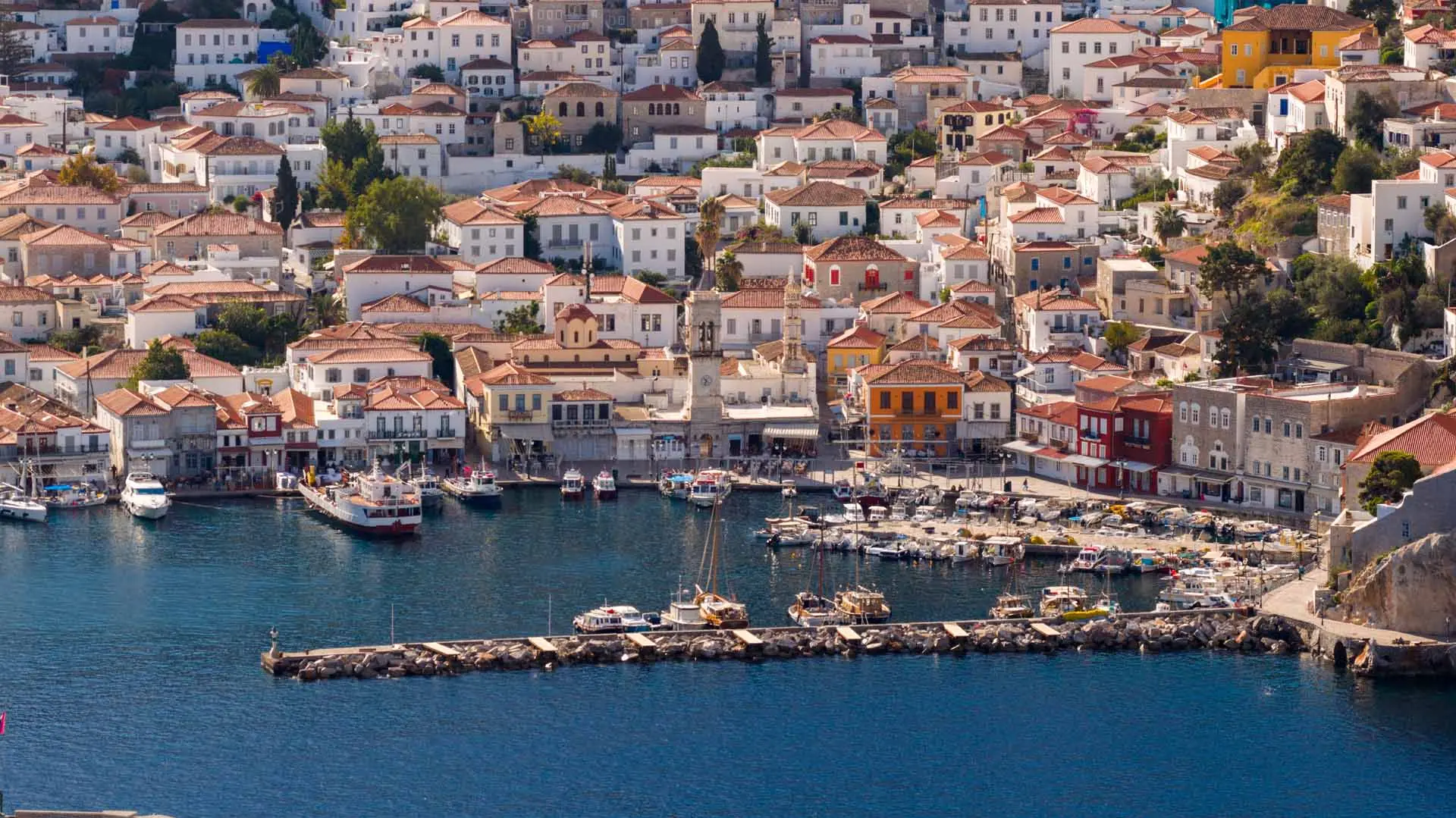
Housed in a modern building on the harbour, the museum keeps the archive of the island's community and tells the story of the island's naval power, which served as a benchmark for the British Admiralty and Napoleon's admirals. Its two floors display ship figureheads, flags, weapons and uniforms, the Charta of Rigas and the silver urn holding the embalmed heart of Andreas Miaoulis.
Lazaros Koundouriotis Historical Mansion
Built in the late 18th century, when Hydra's merchant fleet made the island rich, this mansion on the west side of the harbour belonged to Lazaros Koundouriotis, who gave his ships, crews and fortune to the Greek War of Independence. Important meetings were held here, and it is now a branch of the National Historical Museum. Tickets EUR 10, reduced EUR 5 for students and over-65s, free under 18.
Cathedral of the Assumption
The island's cathedral stands in the middle of the harbour front, inside a former monastery complex now also used by the town hall. It is a basilica with rows of columns, a marble icon screen and chandeliers still lit by candles or oil, and two marble bell towers, one with a clock. A small Ecclesiastical and Byzantine Museum displays vestments, relics and old icons.
Spilia and the harbour bastions
Cannon bastions stand on both sides of the harbour entrance, where they once protected the town. Below them, a few minutes on foot from the quay, Spilia is a rocky area with deep blue water used for swimming and diving, with rocks for sunbathing; the neighbouring Hydronetta lies on the rocks under the cannons. Spilia is also a spot to watch the sunset over the harbour.
Kamini
West of the town along the coastal path, Kamini is a small natural harbour full of fishing boats. Right next to it is Small Kamini, a little pebble beach suited to children, and the village has rooms to rent and tavernas. The walk from the harbour takes about 20 minutes.
Monastery of Prophet Elias
Founded by monks from Mount Athos, the Monastery of Prophet Elias stands in the centre of the island on the slopes of Mount Eros, at more than 450 m. A mosaic of the prophet decorates its gate, and the church has a carved wooden icon screen and old icons; during the War of Independence the monastery served as a prison. It is reached on foot by a steep path through pine forest, about an hour from the church of St Constantine above the town.